Lee County Dog Registration Information
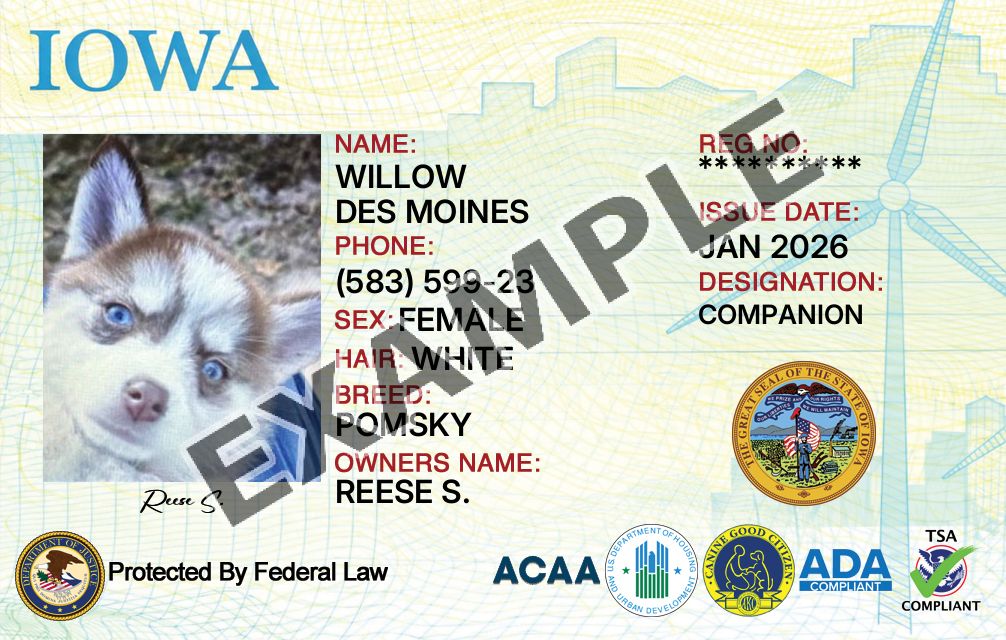
Service Dogs and Emotional Support Animals in Lee, Iowa
If you’re asking where do I register my dog in Lee County, Iowa for my service dog or emotional support dog, the key thing to know is that “registration” usually means getting a local dog license in Lee County, Iowa through the city you live in (if you are inside city limits) or through the county (if you are in an unincorporated area). Service dogs and emotional support animals (ESAs) typically do not receive a special government “registration” that replaces licensing—most dogs still need the same local license and must meet rabies vaccination rules.
Where to Register or License Your Dog in Lee County, Iowa
Because licensing is often handled locally, start with your city office if you live in a city such as Fort Madison or Keokuk. If you live outside city limits, contact county-level offices for guidance on where to register a dog in Lee County, Iowa and which rules apply where you live.
Example Official Offices in Lee County, Iowa
| Office | Address | Phone | Hours | |
|---|---|---|---|---|
| Fort Madison Municipal Building (Pet Licenses) |
811 Avenue E Fort Madison, IA 52627 |
(319) 372-7700 | Not listed in the cited source | Mon–Fri, 8:00 AM–4:30 PM (excluding holidays) |
| Keokuk Animal Services (City of Keokuk) |
249 Carbide Lane Keokuk, IA 52632 |
(319) 526-5421 | Not listed in the cited source | Open to public Mon–Fri, 1:00 PM–5:00 PM |
| Keokuk City Hall (Municipal Government Contact Directory) |
501 Main Street Keokuk, IA 52632 |
(319) 524-2050 | cityadmin@cityofkeokuk.org | Not listed in the cited source |
| Lee County Health Department (Rabies & Public Health Resource) |
2218 Avenue H Fort Madison, IA 52627 |
(319) 372-5225 | rprahn@leecountyhd.org | Not listed in the cited source |
Note: If your dog is picked up as a stray or there is a bite report, enforcement and procedures may involve local animal control, police, or the county sheriff depending on where you live and the situation.
Overview of Dog Licensing in Lee County, Iowa
What “registering your dog” usually means
In everyday terms, “registering your dog” generally means obtaining a local license tag and getting your dog recorded in a local system. This helps animal control return lost pets, supports public health tracking, and creates a clear process for compliance when a dog is found running at large. When people search for animal control dog license Lee County, Iowa, they are typically looking for the correct local office to issue the license and confirm required documents.
Rabies vaccination is a common requirement
In Iowa, rabies prevention and response is treated as a public health issue. Many local licensing programs require current proof of rabies vaccination before issuing a dog license or tag, and local ordinances commonly reference rabies vaccination and licensing together. If you are uncertain what your town requires, ask your city office or local animal control what documentation is needed to obtain or renew your pet license. Iowa’s public health resources provide statewide rabies information and guidance for animal safety and disease prevention.
Service dog or ESA status does not automatically replace licensing
A service dog’s legal status and an ESA’s housing-related protections are separate from municipal licensing. Even if your dog is a working service animal or an emotional support animal, you may still need a local dog license in Lee County, Iowa. The safest approach is to follow the same licensing steps you would for any pet, while also keeping the documentation that applies to your specific situation (for example, vaccination records and identification).
How Dog Licensing Works Locally in Lee County, Iowa
Step 1: Determine whether you live inside city limits
Licensing is frequently managed by the city where you live. For example, the City of Fort Madison states that pet licenses can be purchased at the Fort Madison Municipal Building during weekday business hours. If you live in Keokuk, city animal services and city hall contacts are listed by the City of Keokuk. If you are outside city boundaries, call a county-level office for direction on who issues licenses and who enforces animal ordinances where your address is located.
Step 2: Gather your documents
Most local licensing programs require proof of rabies vaccination from a veterinarian. Some also require proof of residency or an ID, and many have a licensing fee. Keep copies of your rabies certificate and any microchip information in your records. If your dog is a service dog, keep training and handler documentation for your own records—just remember that licensing offices generally focus on vaccination and owner information rather than disability status.
Step 3: Apply and pay the local fee
In many communities, you can apply in person at city hall or the designated municipal building. Fort Madison provides a clear example of in-person purchase at the municipal building during posted hours. If you are trying to confirm where to register a dog in Lee County, Iowa, calling ahead is a good idea to verify acceptable payment methods, renewal cycles, and what documentation must be shown at the counter.
Step 4: Keep tags current and follow local animal control rules
Once licensed, keep the tag information with your dog’s collar as required by your local ordinance. If your dog is lost, the tag is often the fastest way for animal control or law enforcement to identify ownership and contact you. If your dog is involved in an incident such as a bite report, rabies vaccination documentation and local license records can be important to show compliance.
Service Dog Laws in Lee County, Iowa
Service dog status is legal—not a county registration
A service dog is generally defined by what the dog is trained to do: it must be trained to perform tasks or work that directly assists a person with a disability. Service dog status is not created by paying a fee to a website, buying an ID card, or “registering” in an online database. For most residents, the practical takeaway is this: you may need both (1) a valid local dog license and (2) a properly trained service dog—these are different things with different purposes.
Local licensing still matters for service dogs
Even when a dog is a legitimate service dog, cities may still require a local license because the license is connected to rabies control, animal identification, and local enforcement. When people search for dog license in Lee County, Iowa and also mention service animals, they’re often looking for confirmation that they should still license the dog. In most cases, the answer is yes—license the dog through your city or county office, and keep your rabies documentation current.
Public access: what you can be asked
In public places, service dog handlers typically are not required to show “registration papers.” Businesses may be limited to asking whether the dog is a service animal required because of a disability and what work or task the dog has been trained to perform. While this is not a licensing issue, it is commonly confused with dog registration. Your local license is for compliance with local animal rules, not for granting public access.
Emotional Support Animal Rules in Lee County, Iowa
ESAs are different from service dogs
Emotional support animals provide comfort by their presence, but they are not trained to perform disability-related tasks in the same way a service dog is. As a result, an ESA generally does not have the same public-access rights as a service dog. This is one of the biggest sources of confusion behind the question: where do I register my dog in Lee County, Iowa for my service dog or emotional support dog. The licensing office is typically focused on rabies vaccination and local identification—not classifying your dog as a service animal or ESA.
Housing situations: documentation may matter, licensing still may apply
In housing contexts, an ESA may be treated as an assistance animal under fair housing rules, where documentation from a qualified professional may be relevant. However, even if your landlord recognizes your ESA for housing purposes, that does not usually eliminate the need to obtain a local dog license or follow local vaccination and restraint laws. If you live within city limits, check with your city licensing office; if you live outside city limits, contact county offices to confirm the correct licensing authority for your address.
Avoid “instant registration” offers
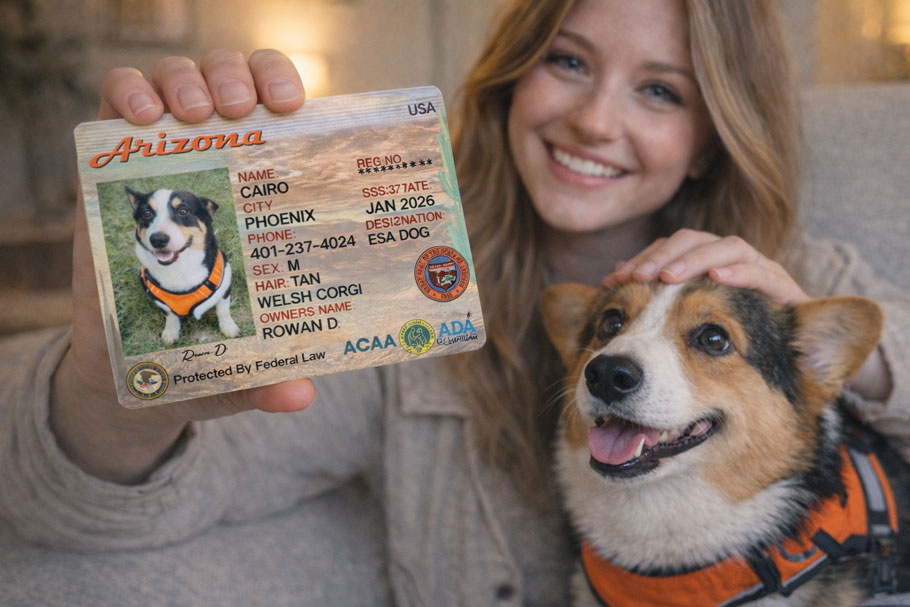
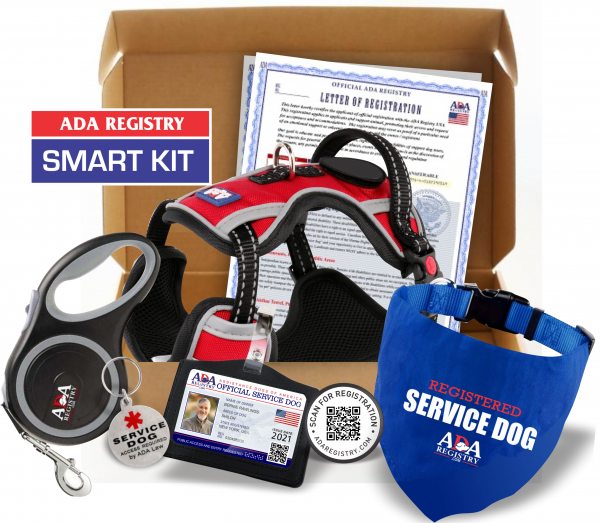
Many third-party sites sell certificates, vests, or “registrations.” Those products are not the same thing as an official local license. If your goal is compliance—especially if you need to show proof to animal control or a local office—focus on obtaining your official city/county license and keeping your rabies vaccination documentation up to date.
Frequently Asked Questions
Do I need a dog license in Lee County, Iowa if my dog is a service dog?
Often, yes. A service dog’s legal status is separate from local licensing. Your city or county licensing requirement usually applies to all dogs, regardless of whether they are pets or working animals. Start by contacting your city office (for example, Fort Madison) or city animal services (for example, Keokuk) to confirm requirements for your address.
Where do I register a dog in Lee County, Iowa if I live in Fort Madison?
Fort Madison states that pet licenses can be purchased at the Fort Madison Municipal Building at 811 Avenue E during weekday business hours. If you have questions about documents or renewals, call the listed phone number before visiting.
Where do I register a dog in Lee County, Iowa if I live in Keokuk?
The City of Keokuk lists Keokuk Animal Services at 249 Carbide Lane, along with phone numbers and public hours. Keokuk City Hall contact information is also published by the city. Call ahead to confirm whether licensing is handled through animal services, city hall, or another city office for your specific request.
Is rabies vaccination required before I can get a license?
In many local programs, yes—proof of a current rabies vaccination is a standard prerequisite for issuing or renewing a local dog license. If you are unsure where to get rabies information locally, the Lee County Health Department is a useful public health resource, and your veterinarian can provide vaccination documentation.
What’s the difference between an animal control dog license Lee County, Iowa and “service dog registration” online?
An animal control dog license Lee County, Iowa typically refers to an official local license issued by your city or county for identification and public health compliance. Online “service dog registrations” are usually not government-issued licensing and typically do not replace local licensing requirements.
What if I live outside city limits in Lee County?
Licensing can differ between incorporated cities and unincorporated areas. If you are not sure which rules apply, call a county or public health office and ask who handles dog licensing and rabies enforcement for your specific address.
Register A Dog In Other Iowa Counties
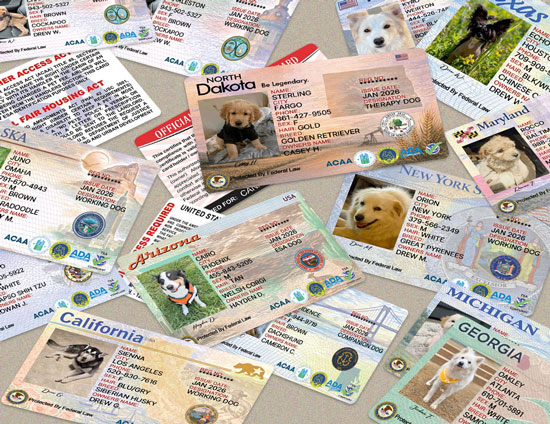
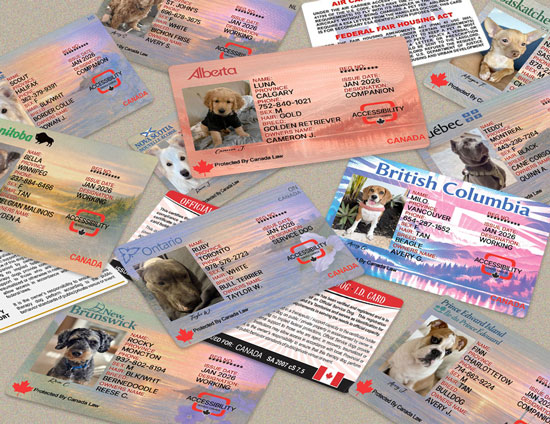
Select your county below to get started with your dog’s ID card. Requirements and license designs may vary by county, so choose your location to see the correct options and complete your pup’s registration.
- Adair County Dog Registration
- Adams County Dog Registration
- Allamakee County Dog Registration
- Appanoose County Dog Registration
- Audubon County Dog Registration
- Benton County Dog Registration
- Black Hawk County Dog Registration
- Boone County Dog Registration
- Bremer County Dog Registration
- Buchanan County Dog Registration
- Buena Vista County Dog Registration
- Butler County Dog Registration
- Calhoun County Dog Registration
- Carroll County Dog Registration
- Cass County Dog Registration
- Cedar County Dog Registration
- Cerro Gordo County Dog Registration
- Cherokee County Dog Registration
- Chickasaw County Dog Registration
- Clarke County Dog Registration
- Clay County Dog Registration
- Clayton County Dog Registration
- Clinton County Dog Registration
- Crawford County Dog Registration
- Dallas County Dog Registration
- Davis County Dog Registration
- Decatur County Dog Registration
- Delaware County Dog Registration
- Dickinson County Dog Registration
- Dubuque County Dog Registration
- Emmet County Dog Registration
- Fayette County Dog Registration
- Floyd County Dog Registration
- Franklin County Dog Registration
- Fremont County Dog Registration
- Greene County Dog Registration
- Grundy County Dog Registration
- Guthrie County Dog Registration
- Hamilton County Dog Registration
- Hancock County Dog Registration
- Hardin County Dog Registration
- Harrison County Dog Registration
- Henry County Dog Registration
- Howard County Dog Registration
- Humboldt County Dog Registration
- Ida County Dog Registration
- Iowa County Dog Registration
- Jackson County Dog Registration
- Jasper County Dog Registration
- Jefferson County Dog Registration
- Johnson County Dog Registration
- Jones County Dog Registration
- Keokuk County Dog Registration
- Kossuth County Dog Registration
- Linn County Dog Registration
- Louisa County Dog Registration
- Lucas County Dog Registration
- Lyon County Dog Registration
- Madison County Dog Registration
- Mahaska County Dog Registration
- Marion County Dog Registration
- Marshall County Dog Registration
- Mills County Dog Registration
- Mitchell County Dog Registration
- Monona County Dog Registration
- Monroe County Dog Registration
- Montgomery County Dog Registration
- Muscatine County Dog Registration
- O'Brien County Dog Registration
- Osceola County Dog Registration
- Page County Dog Registration
- Palo Alto County Dog Registration
- Plymouth County Dog Registration
- Pocahontas County Dog Registration
- Polk County Dog Registration
- Pottawattamie County Dog Registration
- Poweshiek County Dog Registration
- Ringgold County Dog Registration
- Sac County Dog Registration
- Scott County Dog Registration
- Shelby County Dog Registration
- Sioux County Dog Registration
- Story County Dog Registration
- Tama County Dog Registration
- Taylor County Dog Registration
- Union County Dog Registration
- Van Buren County Dog Registration
- Wapello County Dog Registration
- Warren County Dog Registration
- Washington County Dog Registration
- Wayne County Dog Registration
- Webster County Dog Registration
- Winnebago County Dog Registration
- Winneshiek County Dog Registration
- Woodbury County Dog Registration
- Worth County Dog Registration
- Wright County Dog Registration